

Since launching the TEK 920 PulseWave Radar BLE Sensor, we’ve been delighted by the interest and the conversations it’s generated. A few questions keep coming up — about how it performs in the field, what it connects to, suitable applications etc. — so we’ve pulled the most common ones together here.
If you are new to the 920, the sensor itself is straightforward – PulseWave is our non-contact radar level sensor: it mounts on top of the tank, requires no penetration of the tank wall, and sends continuous level data wirelessly via Bluetooth.
Here are our most common questions.
Q How accurate is the PulseWave, and what tank sizes does it support? Using 60 GHz pulsed coherent radar, PulseWave measures up to 3 metres with 2 mm resolution. Accuracy is ±2 cm or ±1% full scale (−25 °C to +85 °C), or ±5 cm at extreme cold. On plastic tanks it can measure through up to 37 mm of wall thickness — no internal fitting needed.
Q How does it connect, and how long will the battery last? The wireless version runs on Bluetooth 5.0 BLE; a wired version offers a 0.5 V – 4.5 V analogue output. The built-in battery is rated up to 15 years. Both versions are available with flat-mount or 1″ NPT adapters.
Q Is it suitable for hazardous or outdoor locations? Yes. IP 6K9K rated, UV resistant, and operational from −40 °C to +80 °C. Certified under ATEX Zone 1, North American Class 1 Division 1 (Group D T3), UKCA ‘Ex’, CE, FCC, RoHS, REACH, and Prop 65. A built-in accelerometer monitors tilt.
Q What kinds of applications is PulseWave suited for? Fuel storage, water and wastewater, chemical and process fluids, oil and gas, and mobile assets such as heating oil tankers and generator fuel tanks. Unaffected by temperature, pressure, or dust — and with no contact with the liquid — it suits a wide range of fluid types and site conditions.
Full technical specifications are available to download via the Technical datasheet on the 920 product page For enquiries about this or any product in our portfolio, email [email protected]
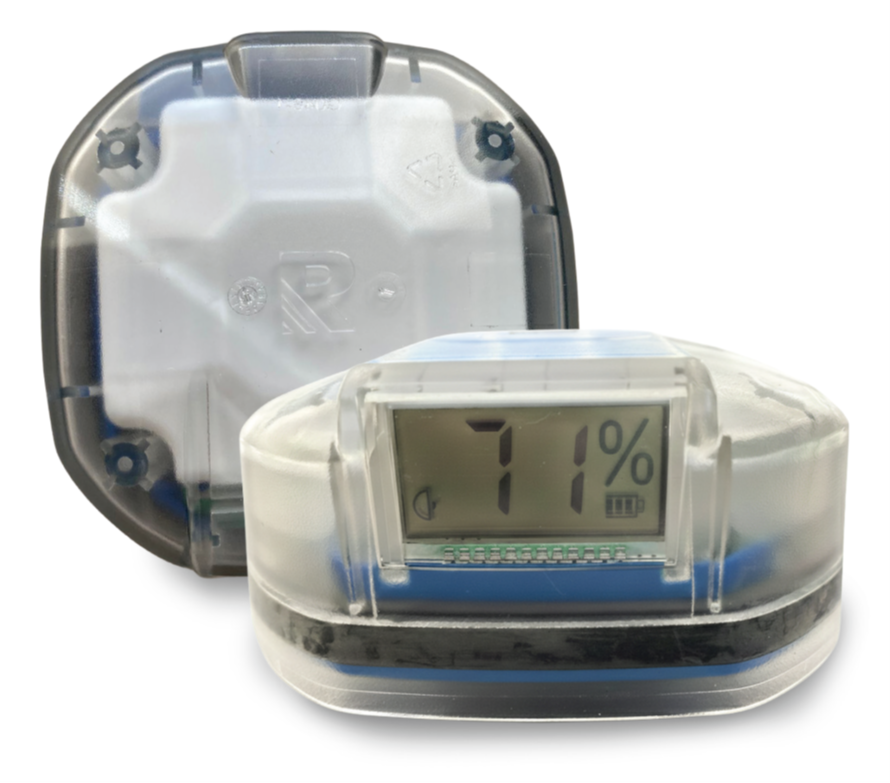
TEK 920 PulseWave Radar BLE

